TrekFlex Biller Portal
TrekFlex is a customizable billing platform with secure payments, real-time tracking, and dual UI modes.
Overview
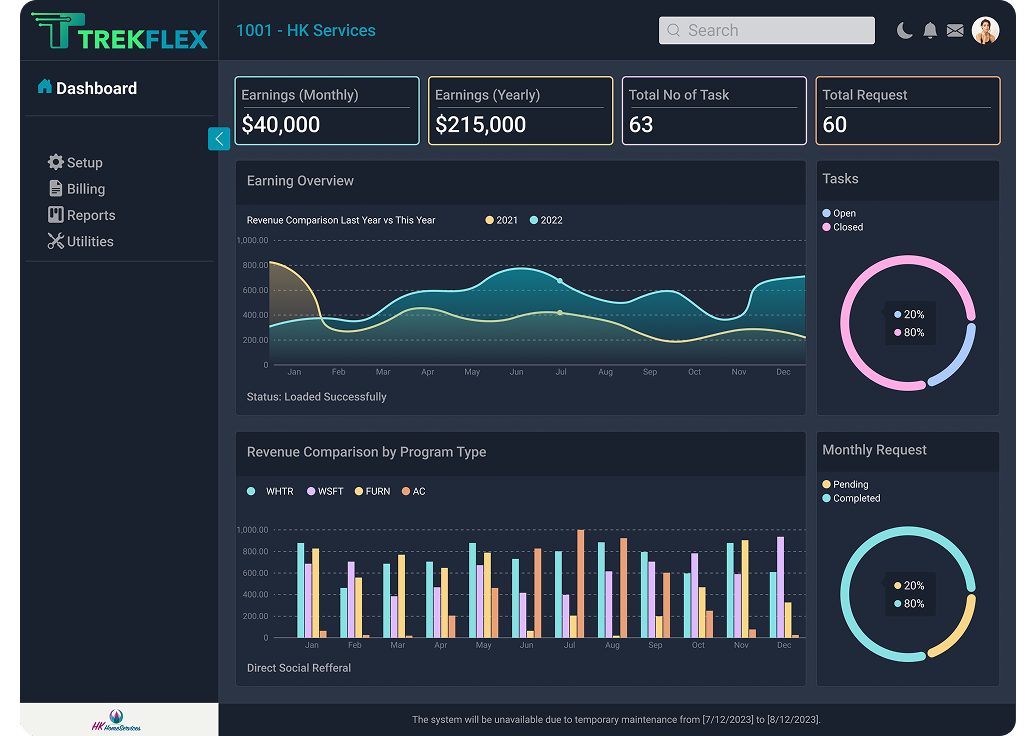
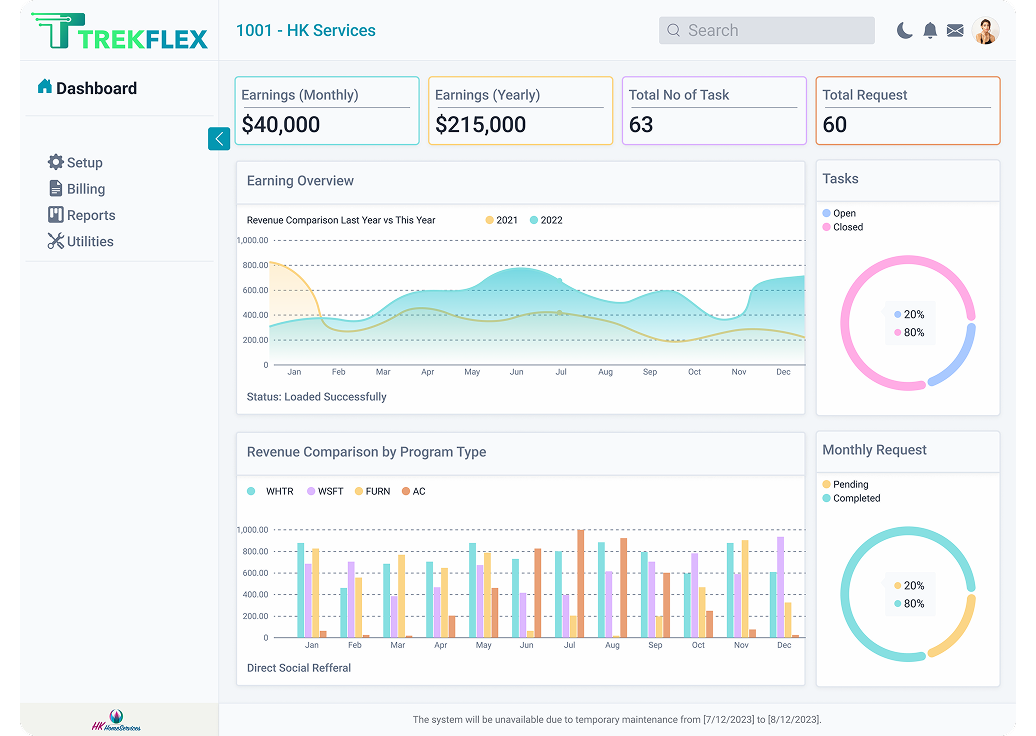
TrekFlex Billing Portal is a billing platform designed for adaptability, offering customizable invoicing workflows and payment methods. It features personalized customer profiles, secure payment processing, and analytics to streamline billing operations and boost efficiency. With a user-friendly interface offering both dark and light UI modes, delivering real-time data and tracking, users can manage accounts effortlessly. Branded as " TrekFlex" the portal stands out as a scalable solution that evolves with industry needs.
The project follows phases—planning, development, testing, deployment, and refinement.
Role and Duration
Product Designer | TrekSoftware
User Research, Interaction, Visual Design, Prototyping, Testing
October 2023 - March 2024
The Problem
Service providers need a streamlined solution to manage billing, asset tracking, and customer communication efficiently because handling these processes manually or across disconnected systems leads to delays, errors, poor customer experience, and limited visibility into performance—ultimately hindering growth and scalability.
Project and Sprint Planning
Over a span of 6 months, the project covered the complete design lifecycle—from product discovery and user research (including online surveys and interviews) to information architecture, wireframing, high-fidelity UI design, interactive prototyping, usability testing, and final preparation for development handoff.
Product Discovery
UX Research
Wireframing & UI Design
Prototype & Testing
Design Delivery
Product Discovery and User Research
Through UX research and product discovery, I interviewed stakeholders from Golspie Dairy and XYZ Nursery, identifying pain points in billing and asset management. Insights from business owners and managers informed our user-centric design. An online survey of billing managers, finance teams, and customer service representatives provided quantitative validation. Secondary research—reviewing industry reports, white papers, and case studies—revealed trends and best practices. Combining these findings, we're developing Flex Biller Portal to address current challenges and adapt to evolving business needs.
Conducting this research was essential to ensure we solved real problems rather than assumptions, and it taught me how deeply understanding user workflows and frustrations leads to more relevant and impactful design solutions.
Research Statistics
Key Research Findings
Workflow Inefficiency
85% of users reported spending too much time navigating between screens
Information Overload
Users felt overwhelmed by cluttered interfaces and unclear data hierarchy
Mobile Accessibility
73% requested better mobile support for on-the-go claim management
Mrs. Marja Deboer - Owner of Golspie Dairy
"On retail we use Shopify and for wholesale QuickBooks, but because neither system talks to the other—and our asset administration is still handled on pen, paper, and spreadsheets—we lack visibility into inventory, insurance records, and equipment maintenance. We need a single solution that unifies billing and asset management into one dashboard so we can eliminate confusion, improve efficiency, and make faster, smarter decisions."
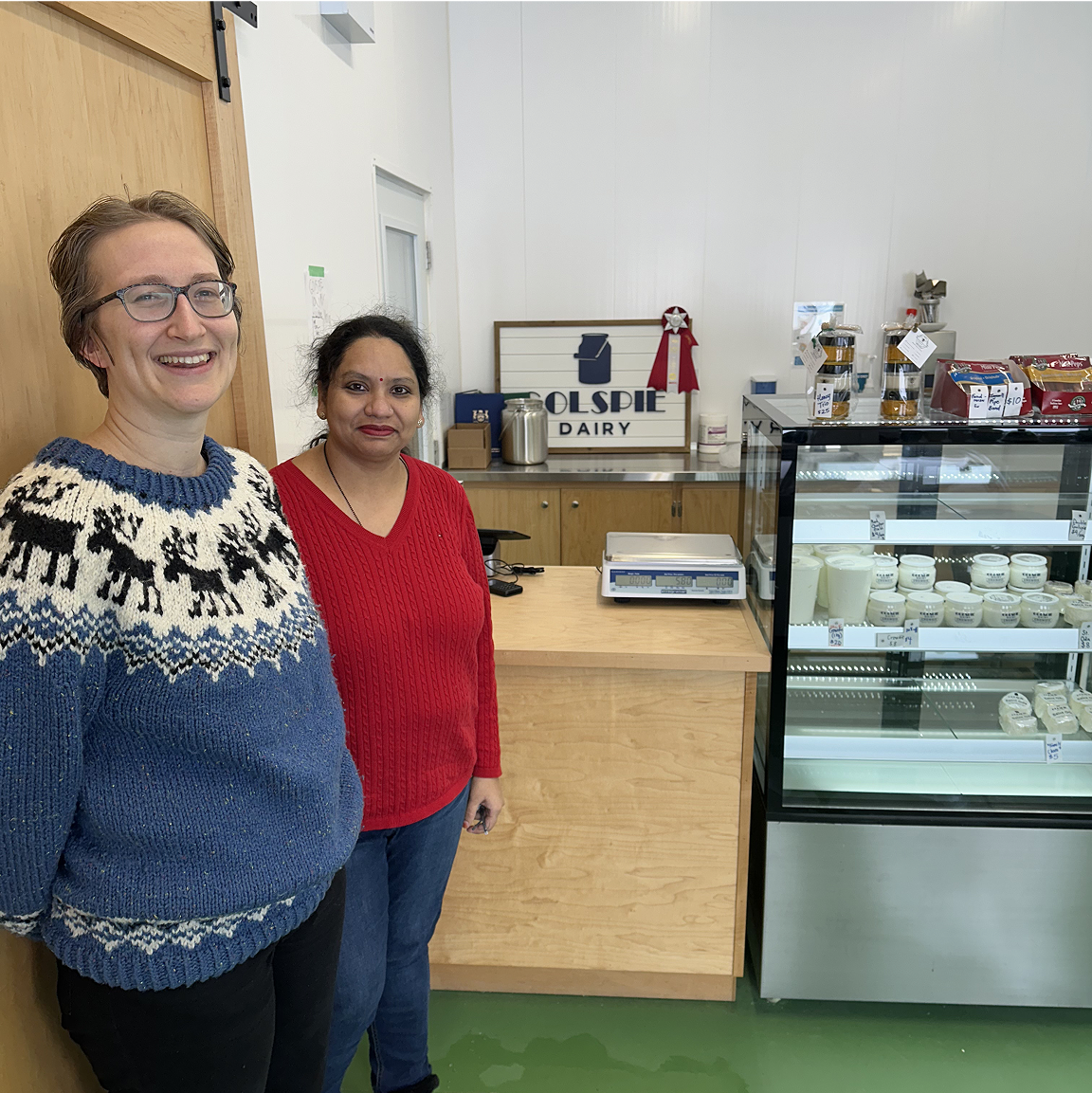
Mrs. Marja Deboer, Owner and Operational Manager of Golspie Dairy, during our user interview at the Golspie Dairy farm in Woodstock Ontario
Head of Sales & Marketing, Plant Nursery
“Right now, we have upfront ATM-style billing for walk-ins and a separate monthly invoicing system for our city-office and corporate clients. It’s functional, but managing two distinct billing processes makes reporting messy. We see huge value in integrating everything into one portal.”
User Persona
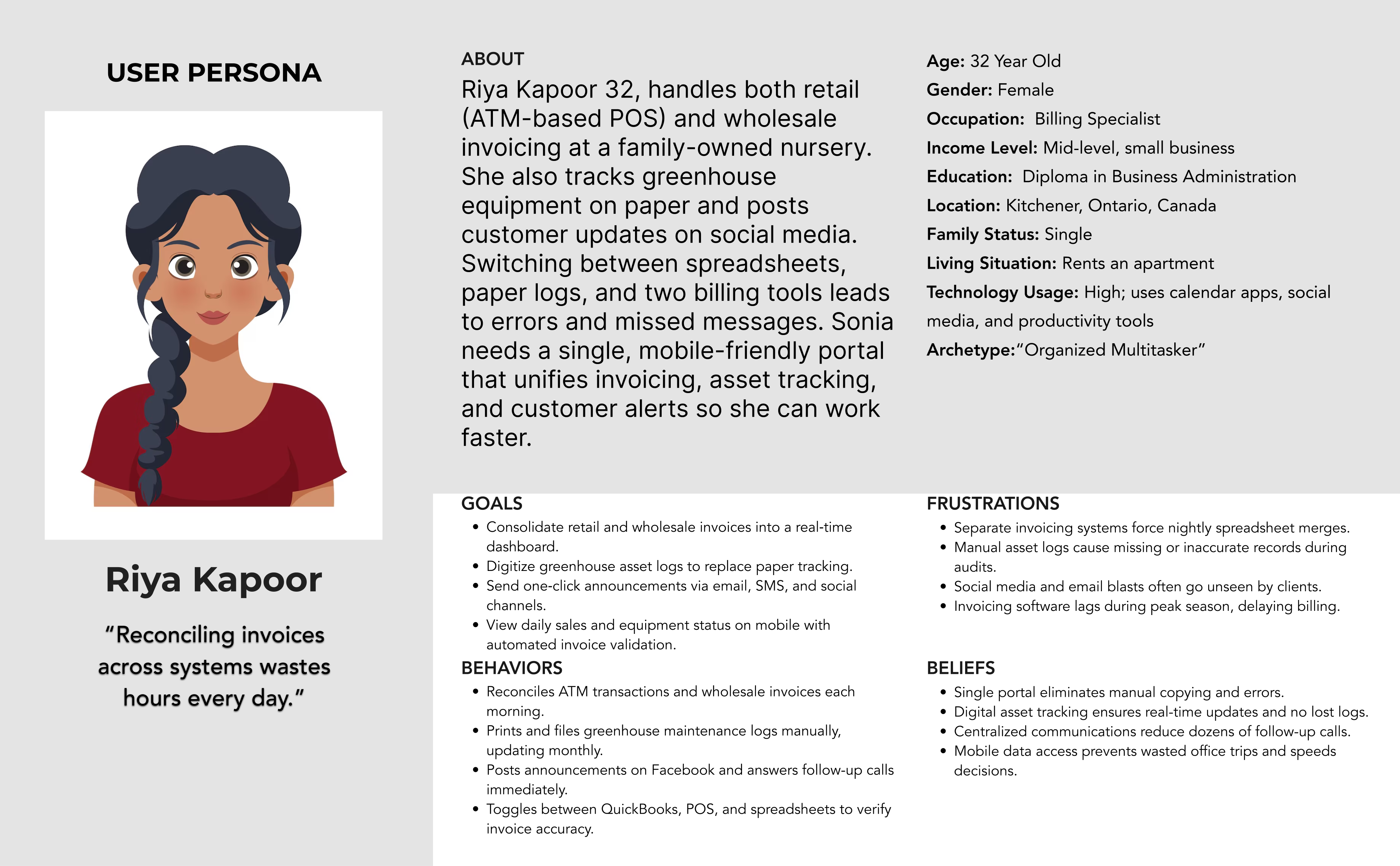
This persona synthesizes insights from stakeholder interviews, contextual inquiries, and online surveys, highlighting key user needs, behaviors, and pain points to guide design decisions for the Flex Biller Portal.
Creating this persona was vital for aligning the team around a shared understanding of our users. It helped humanize data, prioritize features based on real needs, and ensure our design decisions remained focused and relevant. Through this process, I learned how personas can bridge the gap between research and design, keeping user empathy at the core of product development.
Insights
After conducting user interviews, contextual inquiry, and online surveys, we organized the insights into these two categories
Customer-Centric Priorities
- •Stakeholders highlighted in interviews the importance of tailoring billing and asset-management modules for specific user segments (e.g., small dairies, nurseries, finance teams).
- •Contextual observations showed that a unified, integrated platform would reduce context-switching and support diverse roles (billing managers, finance staff, customer-service reps).
- •Emphasis on end-to-end integration and holistic improvements positions organizations for sustained growth and improved customer satisfaction.
Operational Challenges
- •Through contextual inquiry and interviews, users revealed persistent friction points in billing, asset administration, and communication workflows.
- •Manual processes lead to errors and inefficiencies; participants emphasized the value of streamlined, automated steps.
- •Real-time data visibility and centralized access to records emerged as critical needs to optimize day-to-day operations.
Organizing insights helped uncover patterns in user needs and challenges, providing a clear direction for defining our design hypotheses. It taught me how meaningful themes from research can shape focused, problem-solving assumptions.
The Hypothesis
We believe there is a need in the market for Software to enable companies across Industries to Manage assets, Billing, Payments, & Communication with their customer base; but not require an Enterprise Billing System".
Ideation
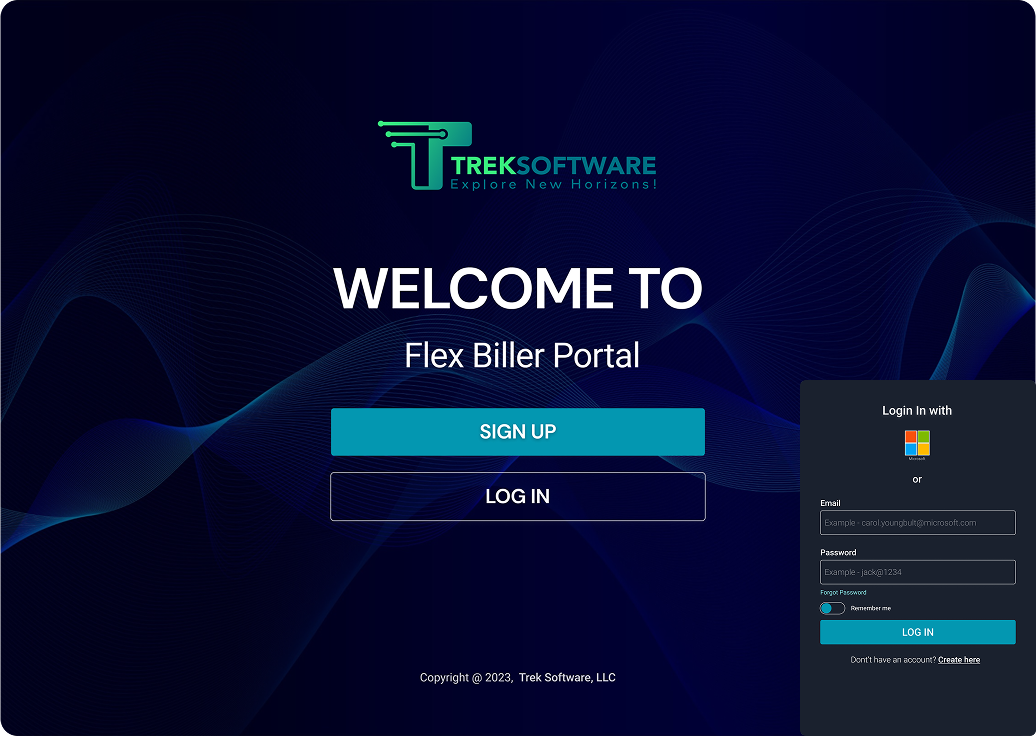
I created initial wireframes to visualize the core flows for the MVP of the TrekFlex Biller Portal. These include login, signup, dashboard views with earnings charts, and a biller profile section—designed to validate user needs, simplify billing tasks, and streamline service operations.
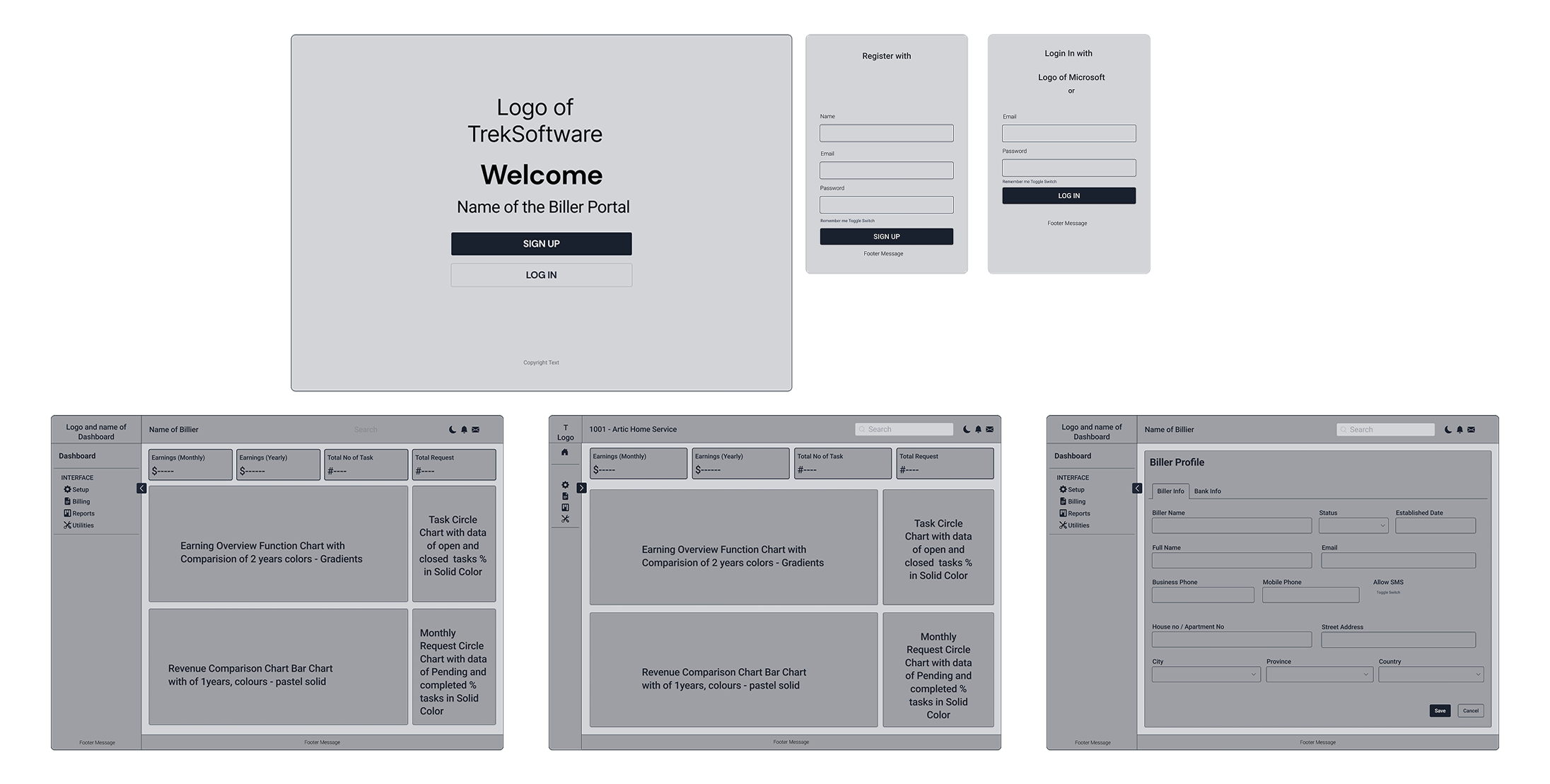
This early ideation phase helped translate research into tangible solutions and taught me how low-fidelity designs can quickly validate concepts and align stakeholders.
Solution
Based on extensive user research and ideation, I designed high-fidelity mockups for the TrekFlex Biller Portal. The solution features a clean, intuitive interface with a comprehensive dashboard that unifies billing information and asset management. The designs prioritize accessibility, mobile responsiveness, and workflow efficiency to address the key pain points identified in research.
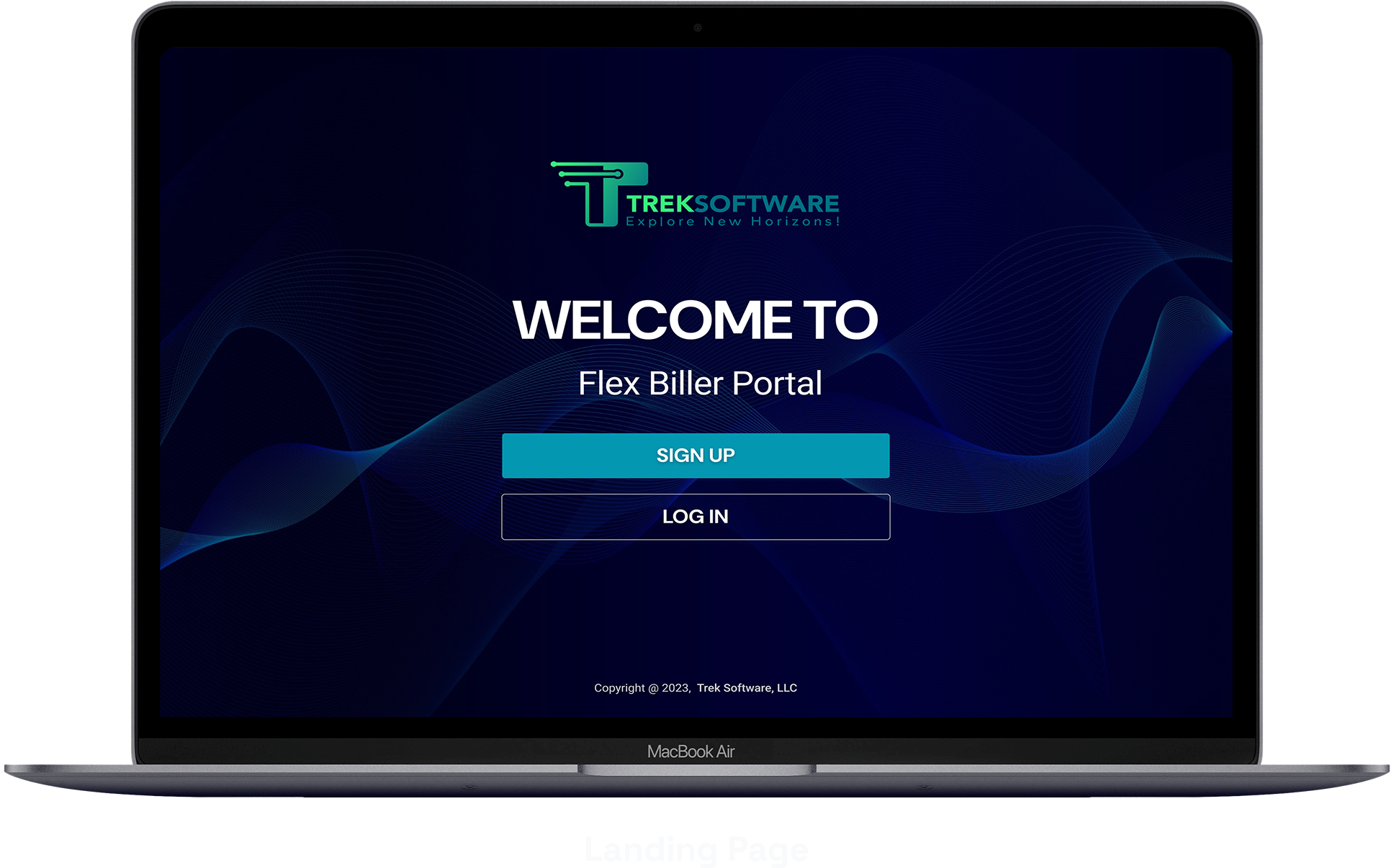
The high-fidelity designs incorporate visual elements from TrekFlex's brand identity while maintaining a focus on usability. User testing of these designs confirmed that they successfully address the major pain points identified in our research, particularly around workflow efficiency and information hierarchy.
Usability Testing
I conducted usability testing at multiple stages throughout the project to ensure a user-centric design approach.
- •
Low-Fidelity Testing –
Wireframes were shared weekly with stakeholders to gather feedback on structure, navigation, and overall functionality.
- •
Mid & High-Fidelity Testing –
Interactive prototypes were tested with hard-coded data by developers team to simulate real scenarios. Insights from these sessions helped refine content hierarchy and UI behaviour.
- •
Client Demos & Feedback –
The working MVP was presented to potential future clients, leading to valuable feedback and praise. Several major clients appreciated the layout and flow.
- •
Stakeholder Reviews –
The final design received positive responses from key stakeholders, who were impressed with the structure, scalability, and clarity of the overall product.
Testing Methodology
I conducted usability testing with 8 utilities specialists using task-based scenarios to validate the design decisions and identify areas for improvement.
Key Improvements
Navigation Enhancement
Added breadcrumb navigation and improved menu structure
Error Prevention
Implemented real-time validation and helpful error messages
Performance Optimization
Reduced page load times and improved data rendering
In Conclusion
TrekSoftware's “TREKFLEX BILLER PORTAL” pioneers a Universal Biller solution, tackling billing challenges with features like bill generation, payment options, asset management, communication and customer profile management. All this can be provided without the cost and complexity of full enterprise billing system.
Improved Efficiency
45% reduction in task completion time and 78% fewer user errors
User Satisfaction
User satisfaction increased from 64% to 92% post-launch
Business Impact
Estimated 30% increase in billing processing capacity
Teamwork and Learnings
This project reinforced the value of involving users early and often through continuous testing and feedback loops. I learned how even small stakeholder insights could lead to meaningful design improvements. Balancing stakeholder expectations with user needs taught me to think critically, adapt quickly, and make design decisions that are both functional and scalable.
Takeaways and Learnings
Key Learnings
The UX requires deep understanding of complex workflows
Small improvements in efficiency have massive impact at scale
Compliance constraints can drive creative design solutions
Future Opportunities
AI-powered claim validation and error detection
Advanced analytics and predictive insights
Integration with emerging tools and technologies
Explore More Work


Interested in collaborating or have a question? feel free to reach out to me
Lets Connect